

The focus is fixed on the year 2026 and its challenges, but also on its opportunities. Especially for small and medium-sized businesses (SMBs), it is crucial to position themselves wisely and deal sensibly with trends—without excessive euphoria or panic, with purpose and aligned to their own capabilities.
Artificial intelligence (AI) has moved beyond the experimentation phase: now, many companies must implement it in order to remain competitive. At the same time, smart approaches are required in other areas as well. Many SMBs can hardly afford missteps and must therefore convert their resources into measurable results as efficiently as possible.
This article reveals what SMBs can expect from IT in 2026 and what proven solution strategies look like.
Status quo
Many SMBs have a clear backlog when it comes to IT. Somewhat paradoxically, most of them are well aware of their shortcomings, such as outdated approaches, technological legacy systems, a lack of integrations, and the failure to implement modern software solutions. In practice, however, progress is slow due to various constraints such as budget limitations, time capacity, or insufficient internal know-how.
Real progress requires budget and expertise
In our in-house study “The State of SMB IT for 2026,” 29% of the surveyed IT specialists and executives cite budget constraints as the main reason why they do not use advanced ITSM, ITAM, and device management tools. Seventeen percent name a lack of qualified personnel, and 16% cite integration difficulties. However, only 9% see an unclear ROI as the main reason, and just 5% cite no perceived need. This clearly shows that the willingness and understanding of the benefits of advanced tools are present, but that the practical means for implementation are lacking.
Integration as a pain point
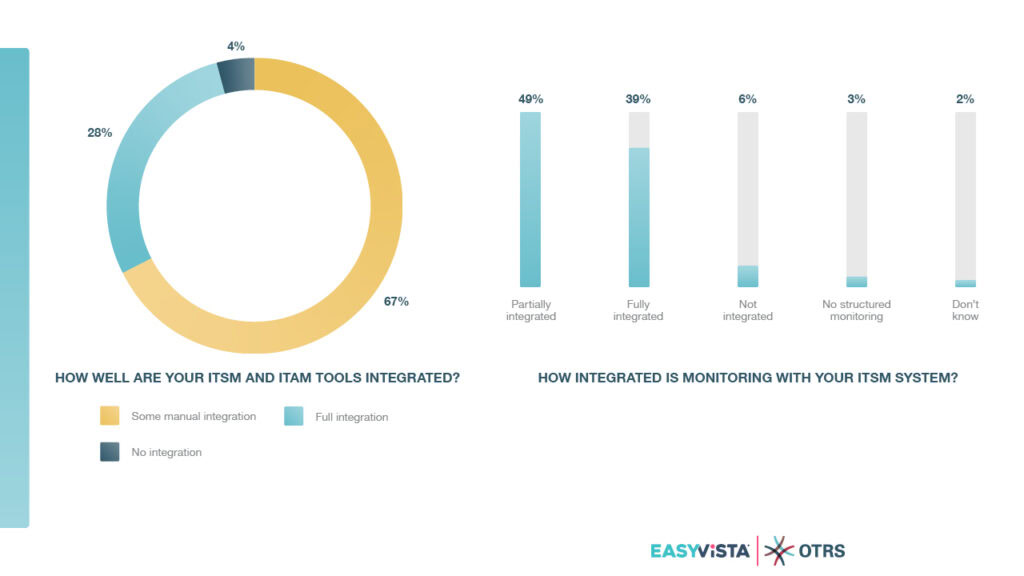
ITSM and ITAM processes are also often poorly integrated. To link the two, two thirds (67%) of respondents still rely on manual processes and Excel spreadsheets. Monitoring tools also frequently remain isolated: only 39% of SMBs have fully integrated them with their ITSM systems.
AI – as expected – a top priority
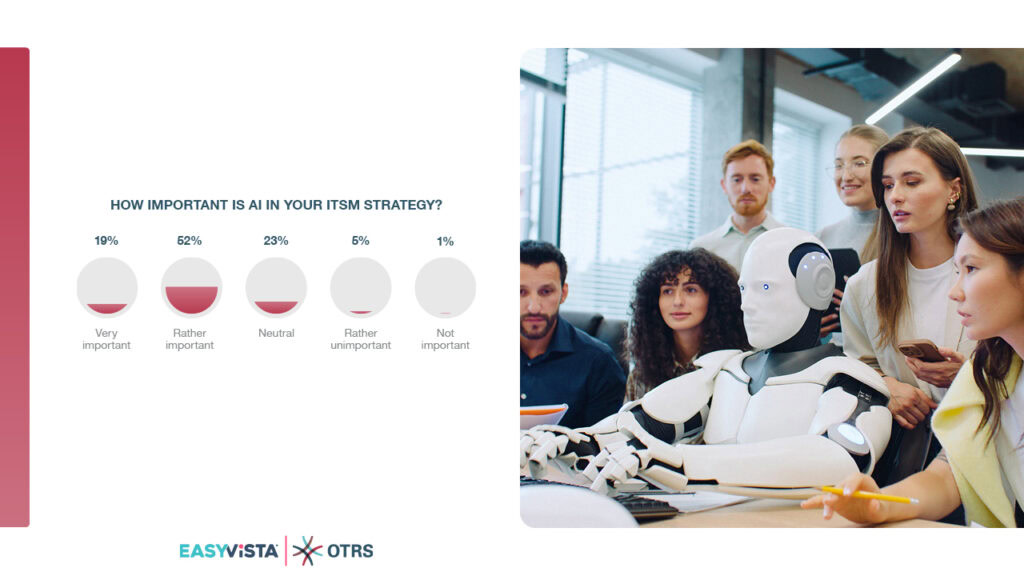
Meanwhile, AI is considered a top priority in the minds of decision-makers: 71% of respondents view it as “important” or “very important,” but in practice they face obstacles such as cost concerns, security issues, insufficient expertise, or integration difficulties. So far, AI is primarily used for IT asset tracking and reporting, task automation, trend analysis, process optimization, and the prediction and prevention of IT incidents.
Overall, many SMBs bring good prerequisites to act progressively, modernly, and with a future-oriented IT strategy. However, they encounter practical obstacles in many areas that are not easy to overcome.
Challenges
A sluggish economy, experiences from multiple crises, cost-cutting pressures: even at the level of IT budgets, overarching challenges are manifold. On the other hand, a shortage of skilled workers, insufficient internal know-how, and small teams face numerous technical hurdles and practical needs.
Another challenge is the presence of tools that are outdated, poorly integrated, or barely aligned with one another. Many IT departments must first resolve their internal issues before they are able to tackle new challenges. This creates a latency period during which many SMBs lose technological ground. This underscores how important it is to continuously maintain and update internal IT processes and to keep an eye on the organization’s ITSM maturity level.
For IT service delivery, in addition to staff shortages and budget constraints as the leading challenges (each cited by 40%), security and compliance (37%), slow response times (35%), and insufficient tool integration (32%) are also considered major challenges.
Opportunities
There are also several areas in which small and medium-sized businesses can turn circumstances to their advantage and develop new capabilities. One key aspect lies in targeted efficiency gains, enabling organizations to achieve as much as possible with limited resources. This first requires an excellent overview of the IT market and the company’s own capabilities.
Important prerequisites include market analyses, maturity assessments, and a focused examination of existing tools and competencies. If companies then deploy AI applications, automation, or process and workflow optimizations precisely where they make sense, previously untapped potential can be unlocked in some cases.
In line with this, many SMBs seize opportunities less through radical IT overhauls and more through targeted modernizations with measurable benefits. Progress is gradual but steady. This is also reflected in the top priorities for 2026:
- 41% of surveyed SMB representatives primarily want to improve security.
- 31% are focused on automating IT workflows.
- 30% are considering introducing AI services or tools.
- 29% want to invest in increasing employee productivity.
- 30% identify employee training as a top priority.
It is precisely in these areas that the most valuable opportunities are hidden:
- Those who maintain a high level of security protect themselves against numerous threats.
- Those who introduce automation and AI operate more efficiently, reduce errors, and gain flexibility.
- Those who focus primarily on their employees look inward and recognize what truly matters: people who drive the company forward—especially creatively, strategically, and in value creation.
A derived formula for success could look like this:
SMBs should combine the strengths of artificial intelligence and automation with human creative power in a secure environment. This provides fertile ground for fully developing their potential.
Perspectives for 2026
When we sharpen our focus on the year 2026, several key areas emerge that are decisive for SMBs in terms of their IT strategies.
The rise of AI
Artificial intelligence (AI) is receiving a great deal of attention—too much, according to some observers, who instead emphasize distinctly human values and strengths. However, there is no contradiction here: for successful, modern, and future-oriented IT, AI plays a key role that only takes on clear form and becomes a game changer when combined with human strengths such as creativity, unconventional thinking, and strategic oversight.
One of the findings of our study “The State of SMB IT for 2026” was that 17% of respondents consider a lack of knowledge or expertise, and 15% integration difficulties, to be the biggest obstacles to using AI. Both are among the most frequently cited answers and can be addressed internally, as they are internal factors, by investing in training and education and by revising the existing tool landscape.
External factors such as costs (19%) or concerns regarding hallucinations and data accuracy (8%), on the other hand, can be addressed through intelligent budgeting and optimized prompting.
For SMBs, the path forward now lies in gradual AI implementation. The relevant applications must be used sensibly for specific tasks and with a clearly identifiable and measurable benefit.
The topic of security
Security remains a top topic for IT. “Safety first” is not just a phrase here, but a clear directive that IT leaders are following. After all, other factors such as the broad implementation of AI and automation or the introduction of new modern tools depend on IT security and compliance.
Security requires continuous attention, particularly in hybrid and remote-oriented work environments. The highest priority is ensuring that regular IT operations run smoothly, without issues, outages, or delays. To avoid and mitigate risks, SMBs should invest not only in relevant technologies but also in process optimization and regular employee training.
To move boldly and confidently into the future, SMBs must not allow security challenges to hold them back.
Enterprise Service Management (ESM)
Take what is successful and promising and apply it as broadly as possible: this is a well-known formula for success. Instead of constantly trying new things, proven practices are applied to new areas. According to this principle, IT Service Management (ITSM) can be expanded into Enterprise Service Management (ESM), allowing as many departments as possible to benefit from useful ITSM practices.
According to our study, typical areas in which SMBs use ITSM-based tools and workflows include customer service (49%), human resources (43%), finance (42%), and office management (41%). However, less typical areas such as facility management or marketing are also suitable for ITSM practices.
In 2026, efficiency and measurable results are required instead of experimentation and exploration. Against this backdrop, SMBs must use the resources available to them wisely and profitably.
Meaningful investments
The question of how much budget is allocated to IT—just as in other areas—can be boiled down to the fundamental question: “Invest or save?” Meaningful investments are the logical answer, but where and how investments will be successful often cannot be clearly determined in advance.
In 2026, SMBs are required to conduct strategic analyses and deploy their IT budgets with precision. Simply saving money means missing out on important developments and trends, while misguided investments can lead to financial imbalance and, as a consequence, almost certainly to technological lag.
Empowering employees
Letting the gaze drift solely toward technology does not even complete half of the puzzle of successful SMB IT. Accordingly, more than half of the surveyed SMBs state that training and continuing education are crucial for achieving an adequate level of ITSM maturity.
This requires not only intuitive tools, but also the appropriate know-how to use them effectively and purposefully. This is a key factor in successfully positioning IT as a strategic driver in support of business objectives in 2026 and beyond.
Background: Employees are increasingly called upon to manage initiatives, make relevant decisions, and achieve problem solutions.
Conclusion
Small and medium-sized businesses (SMBs) are currently in a state of tension when it comes to IT. On the one hand, they feel pressure to invest, keep pace with trends and developments, and introduce efficient processes. On the other hand, practical constraints such as technological legacy systems, small teams, and budget limitations stand in the way.
This vicious circle can sometimes weigh heavily, but it can be at least partially broken through intelligent decisions. Companies must have a clear understanding of themselves, their requirements, and their ITSM maturity level in order to make real progress with software, implement task-based AI, and provide appropriate training and education for their employees.
In 2026, the goal is no longer merely to experiment with numerous technological innovations, but to achieve measurable results. This requires, among other things, software that promises a rapid ROI and simplifies day-to-day operations. SMBs must evaluate trends based on their own status quo and adapt them selectively—where it makes operational and strategic sense.